Las Vegas Nevada
Las Vegas Painted in Light
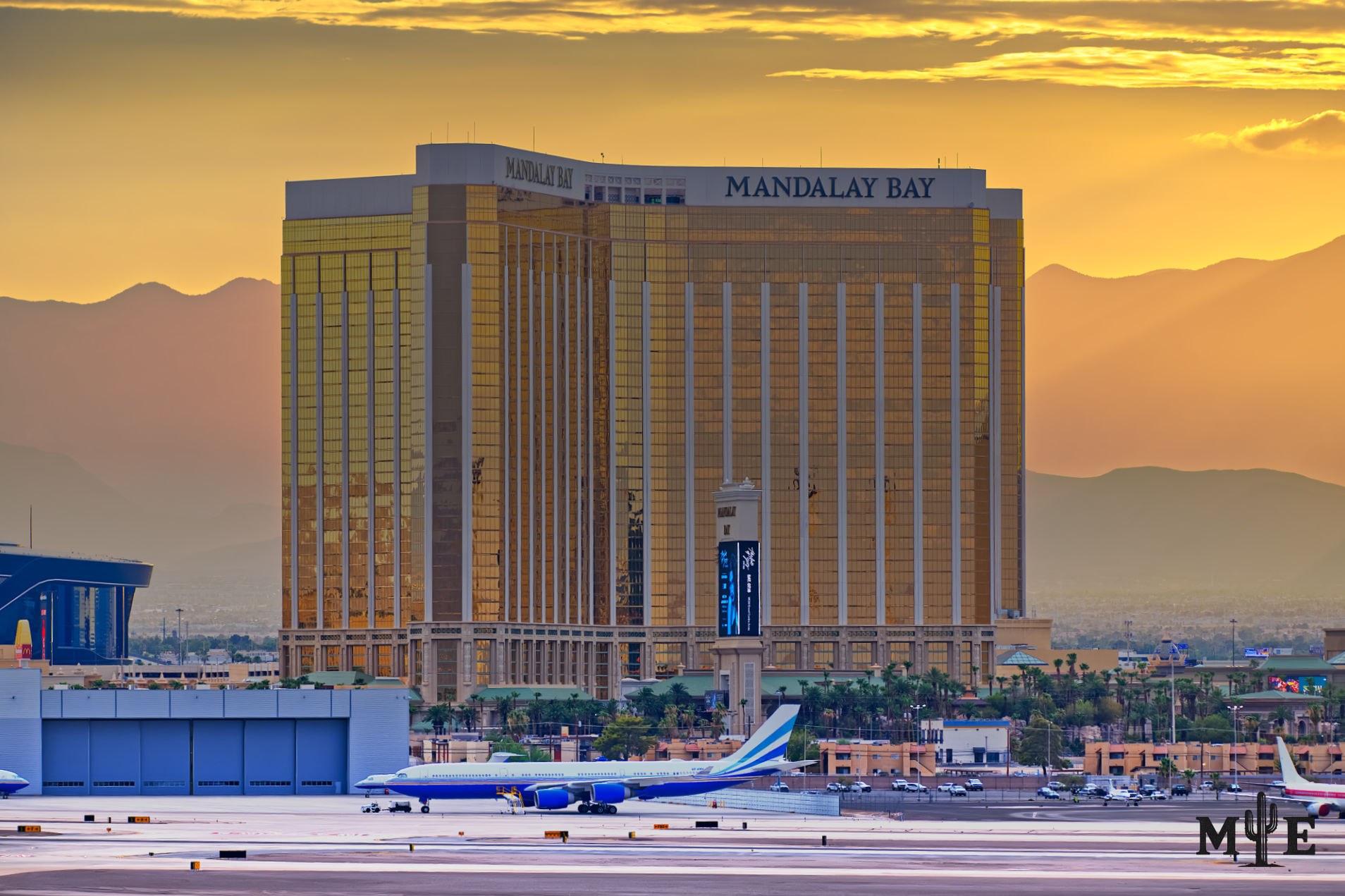
A Las Vegas sunset can make the city feel secondary to its surroundings. In this photograph, Mandalay Bay and a jet at Harry Reid International Airport provide scale, but the real subject is the sky: intense color spreading above dark mountain ridges as the day leaves the Mojave Desert.
The basic science is the same in Las Vegas as anywhere else. Near sunset, sunlight travels through a much longer section of the atmosphere than it does at midday. Air molecules scatter differently, leaving more orange and red light to reach the viewer. Dust, smoke, pollution, water droplets and ice crystals can modify the result by scattering and reflecting light. Especially when clouds are positioned high enough to remain illuminated after the ground has darkened.
There are no unusual desert gases responsible for the color. Heat does not directly paint the sky red, either. What extreme heat can do is change convection, haze, dust and cloud development, all of which influence how a particular sunset appears. A smoky or dusty sky may produce unusually saturated color, but that does not mean the air is healthy, nor will it make for a better photo.
Las Vegas geography matters because the valley is surrounded by mountains, with the Spring Mountains rising dramatically to the west. Those ranges block much of the Pacific moisture that approaches from California and contribute to the region’s dry climate. They also create a clean, irregular horizon and can force air upward, helping clouds develop over higher terrain. During the late-summer monsoon pattern, moisture and thunderstorms often build around the mountains, producing rain shafts and broken cloud layers that catch evening light.
The idea that cool California air simply pours over the Spring Mountains every evening and dissipates across the valley is too simple. Pacific weather systems, downslope winds and temperature differences can all move air through southern Nevada, but no single flow explains Vegas sunsets. The most dramatic evenings usually require a useful combination: relatively clear air near the horizon, clouds high enough to catch light and enough open sky for the setting sun to reach other areas.
For a mountain-framed sunset, the western and northwestern valley offer excellent perspectives. Lone Mountain and elevated west-side parks can place the Strip beneath the changing sky. Red Rock Canyon provides a closer view of sandstone and the Spring Mountains; visitors using the Scenic Drive should remember that timed-entry reservations are required during designated daytime hours from October through May, while the Red Rock Overlook outside the loop has limited parking. Never stop in a traffic lane or damage desert shoulders for a photograph.
Elevated urban viewpoints create a different composition. The Strat observation deck looks across the entire valley from more than 1,000 feet above the Strip. Hotel observation areas and legally accessible parking structures can align resort towers with the western horizon. South and east of the Strip, higher ground in Henderson can frame the city against the Spring Mountains. Lake Mead and the desert east of town reverse the view, placing the sun behind the metropolitan basin.
Arrive before the advertised sunset time. The strongest photograph may occur 20 minutes before the sun disappears, when the mountains still have texture, or 20 minutes afterward, when clouds deepen from gold to magenta and the city lights become visible. Winter often brings crisp air and layered storm clouds. Late summer can produce extraordinary monsoon skies, but lightning, flash flooding and strong outflow winds require caution.
What makes a Las Vegas sunset special is not one exotic chemical or weather trick. It's the collision of ordinary atmospheric physics with an extraordinary setting: a broad desert basin, abrupt mountains, dry air, occasional dust and cloud layers, and a city built to glow just as natural light fades. In this image, even an aircraft and one of the Strip’s largest hotels become supporting details. For a few minutes, the desert takes the skyline back.
Prints, Artwork and Licensing
This photograph is available for project-specific review as finished wall artwork and for appropriate editorial, commercial, hospitality, corporate, healthcare, or civic licensing. Final dimensions, cropping, materials, usage, production, and installation requirements are confirmed for each project.
Use the inquiry button above and reference ME-00407 so the exact image can be identified quickly.


