Telephoto
Things to Do in Vegas Beyond the Casino Floor
Las Vegas is often described as though every activity begins and ends inside a casino. Gambling remains part of the city’s identity, but it's no longer necessary to build a full trip around it. A visitor can spend several days moving among architecture, live entertainment, museums, sports, restaurants, outdoor destinations, neighborhood districts and large-scale attractions without placing a single bet.
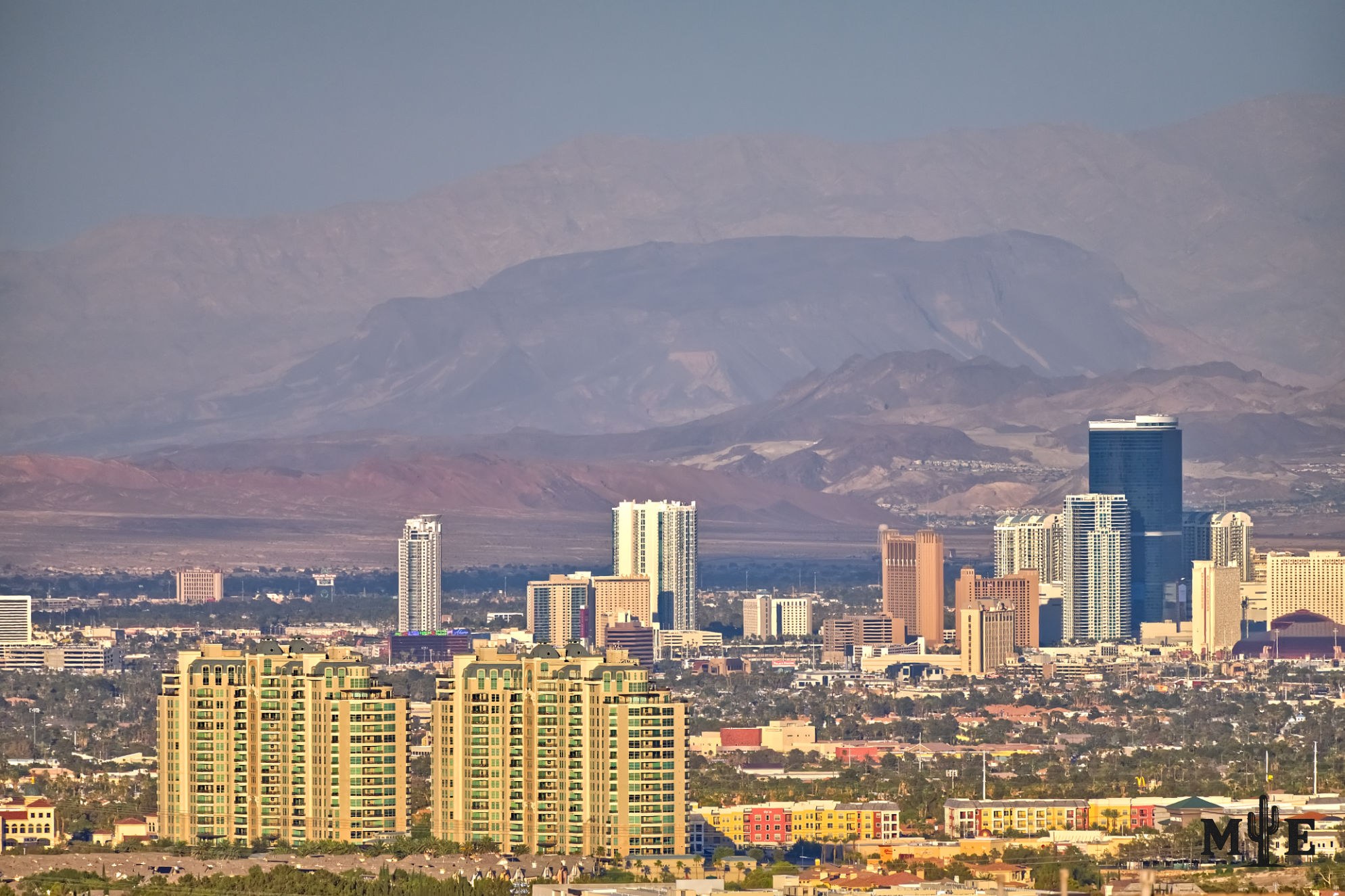
The photograph provides an appropriate introduction because the Strip is only part of the scene. Residential towers occupy the foreground, resort buildings rise farther away and the larger valley stretches between them. Las Vegas is both a destination and a functioning metropolitan area, and the best visit usually combines the famous corridor with at least one experience beyond it.
Start with the Strip as an outdoor attraction
Walking the Strip is an activity in itself. The resorts are built as enormous visual environments rather than ordinary hotels. A single walk can move past a pyramid, a castle, a compressed Manhattan skyline, an Eiffel Tower, Roman fountains, Venetian canals and contemporary glass towers. The architecture is theatrical, but it also provides a record of changing eras in Las Vegas development.
Several of the city’s most familiar attractions are free. The Bellagio fountains combine water, music and light in front of the resort. The Bellagio Conservatory changes its elaborate botanical displays through the year. The Welcome to Fabulous Las Vegas sign provides a classic photograph at the southern entrance to the resort corridor. At Wynn, Lake of Dreams presents an evening multimedia show, while the Forum Shops at Caesars Palace stage the Atlantis display. Schedules and operating policies change, so current times should be confirmed on the day of a visit.
The Strip is longer than it appears on a map. Pedestrian bridges, resort interiors and controlled crossings add distance, and summer heat can make a multi-property walk exhausting. Choose one section at a time rather than assuming the entire corridor can be explored casually in one afternoon.
See the city from above
Observation experiences include the High Roller wheel, the Eiffel Tower viewing deck at Paris, the observation levels at The STRAT and hotel lounges positioned high above the street. Each presents a different relationship between the Strip, downtown, airport and desert edge.
A daytime visit reveals the scale of the valley and the mountains around it. Sunset adds color and gradually activates the city lights. At night, the resort corridor appears brightest, but residential development and roads show how far metropolitan Las Vegas extends beyond it.
Helicopter flights offer another perspective, with options ranging from short Strip circuits to longer journeys toward Hoover Dam or the Grand Canyon. These experiences are expensive compared with an observation deck and are sensitive to weather, weight restrictions and operating conditions, but they reveal how abruptly the city meets open desert.
Attend a show or live performance
Entertainment is one of the strongest reasons to visit Las Vegas. Large production shows combine acrobatics, dance, music, comedy, illusion and specialized theater technology. Cirque du Soleil operates several distinct resident productions, while individual resorts host magicians, comedians, tribute performers, adult revues and limited-run residencies.
Different people enjoy different things. Therefore, a family may prefer spectacle and visual storytelling. A couple may want comedy, music or an intimate theater. A dedicated fan may plan the entire trip around a touring artist at Allegiant Stadium, T-Mobile Arena, Dolby Live, Resorts World Theatre, the Colosseum or another major venue.
Downtown and off-Strip rooms provide smaller alternatives. Live music appears in casino lounges, the Arts District, local bars and dedicated venues. The Smith Center presents Broadway touring productions, classical music, dance and other performing arts in Symphony Park, adding a formal cultural institution to a city better known for casino theaters.
Experience Sphere and immersive attractions
Sphere changed the Las Vegas skyline through both its exterior display and interior performance environment. Even without a ticket, the illuminated exterior has become a visual attraction visible from several parts of the valley. Ticketed events use a massive interior screen, spatial audio and specialized effects to create an experience unlike a conventional arena.
AREA15 offers a different form of immersion west of the Strip. Its best-known tenant, Omega Mart by Meow Wolf, begins as a surreal supermarket and expands into rooms, hidden passages and narrative environments. Other attractions, bars and event spaces share the complex. It works well for people who want something deliberately strange and participatory rather than a passive show.
Additional immersive art, illusion and technology attractions appear throughout the city. Their quality and price vary, so it's worth deciding whether the experience is primarily an exhibition, a photo opportunity, a game or a full performance before purchasing tickets.
Explore downtown Las Vegas
Downtown is not simply a cheaper version of the Strip. It's the city’s original commercial and casino center. The Fremont Street Experience places historic hotel façades, live entertainment and a giant video canopy within a pedestrian corridor. The atmosphere is louder, denser and more openly street-oriented than most resort interiors.
Circa has added a modern tower, large sportsbook and Stadium Swim to the western end of Fremont Street, while Binion’s, Golden Gate, El Cortez, Golden Nugget, the Plaza and other properties preserve different parts of downtown casino history. Visitors can move among several hotels without the long distances required on the Strip.
East of the canopy, Fremont East contains bars, restaurants, restored neon and smaller entertainment venues. Farther south, the Arts District includes galleries, vintage shops, breweries, restaurants, murals and First Friday events. Main Street has become one of the city’s strongest areas for independent businesses and provides a useful contrast to corporate resort retail.
The free Downtown Loop shuttle connects several central attractions, but schedules and stops should be checked before relying on it.
Visit museums that explain the city
The Mob Museum occupies the former federal courthouse downtown and examines organized crime, law enforcement and the history behind the mythology of Las Vegas. It's one of the most substantial museums in the city.
The Neon Museum preserves signs from demolished hotels, casinos and local businesses. Its outdoor collection shows how typography, electrical technology and branding changed as Las Vegas rebuilt itself. Evening visits provide illumination, while daytime visits reveal construction detail and weathering.
The National Atomic Testing Museum explains Nevada’s relationship with nuclear testing and the wider history of atomic science and national security. The Springs Preserve and Nevada State Museum cover natural history, Indigenous history, settlement, water and regional development. The Clark County Museum in Henderson presents historic buildings and exhibits related to Southern Nevada communities.
For art, visitors can explore resort collections, galleries in the Arts District, public installations at CityCenter and changing museum or university exhibitions. Las Vegas art is not confined to one central institution; it's dispersed through hotels, civic buildings, campuses and private galleries.
Watch professional and major-event sports
Las Vegas has become a major sports city. The Vegas Golden Knights play at T-Mobile Arena, the Las Vegas Raiders at Allegiant Stadium and the Las Vegas Aces at Michelob ULTRA Arena. The Las Vegas Aviators play minor-league baseball at Las Vegas Ballpark in Summerlin. College sports, boxing, mixed martial arts, rodeo, motorsports and major tournament events add to the calendar.
A game changes the rhythm of a trip because venues are integrated with entertainment districts. T-Mobile Arena connects directly with The Park and nearby resorts. Allegiant Stadium sits west of Interstate 15 near Mandalay Bay. Las Vegas Ballpark is beside Downtown Summerlin and City National Arena. Event traffic and security can add considerable time, so transportation should be planned before the scheduled start.
Formula 1, NASCAR weekends, major fights and large tournaments can affect hotel prices and road access far beyond the venue itself. A visitor who is not attending should still review the event calendar before choosing travel dates.
Find family-friendly activities
Las Vegas is not designed exclusively for children, but families have more options than the city’s adult reputation implies. Shark Reef Aquarium at Mandalay Bay presents sharks, rays and other animals in a large indoor attraction. Discovery Children’s Museum offers interactive learning near The Smith Center. The Pinball Hall of Fame combines playable machines with an informal museum-like collection.
New York-New York has the Big Apple Coaster and arcade. Excalibur includes arcade attractions and Tournament of Kings. Resorts with large pool complexes can become daytime destinations, although age rules, seasonal access and guest restrictions vary. Indoor activities are especially important during summer as walking in high heat is unpleasant.
Families should choose lodging based on the complete itinerary. A hotel that appears centrally located may still require long walks through casinos and pedestrian bridges. Smoke exposure, pool access, refrigerator availability and transportation can matter more than a themed exterior.
Eat beyond the buffet stereotype
Dining has become one of Las Vegas’s largest attractions. The city supports fine dining, steakhouses, tasting menus, regional Chinese food, Japanese restaurants, Korean barbecue, Mexican cuisine, Filipino food, plant-based restaurants, old-school Italian rooms and a large collection of casual specialists.
The Strip contains the most famous chef names and elaborate dining rooms, but some of the most interesting value and diversity appears away from Las Vegas Boulevard. Spring Mountain Road and the broader Chinatown corridor contain restaurants representing many parts of Asia rather than one narrow theme. Downtown and the Arts District have independent restaurants, breweries and bars. Henderson and Summerlin provide strong neighborhood dining without resort crowds.
Reservations are useful for prominent restaurants, but flexibility can also produce a better trip. Lunch, happy hour and counter-service options may provide access to the same kitchens at lower cost. Resort convenience carries a premium, and a simple meal inside a hotel can become expensive after drinks, tax and gratuity.
Experience nightlife without assuming it means one thing
Las Vegas nightlife includes far more than mega-clubs. Celebrity-DJ venues offer enormous sound systems, production effects, pool parties and table service. Cocktail lounges provide smaller spaces and more conversation. Downtown bars, country venues, piano rooms, comedy clubs, breweries and late-night restaurants attract very different crowds.
Choose based on the desired experience rather than the most heavily advertised name. Club admission, dress codes and table minimums can be significant. A lounge may be more enjoyable for someone who wants a view or well-made drink without committing an entire night to a crowded dance floor.
Dayclubs are essentially nightlife moved into the afternoon around a pool. They are not the same as an ordinary hotel pool and may have separate admission, age restrictions and bag policies. Guests looking for relaxation should confirm whether their resort has a quiet pool option away from the party environment.
Shop, walk and slow down
Las Vegas shopping ranges from luxury boutiques at major resorts to outlet centers, vintage stores and ordinary neighborhood retail. Fashion Show mall sits on the Strip, while the Forum Shops, Grand Canal Shoppes, Shops at Crystals and resort promenades combine retail with elaborate architecture. North and South Premium Outlets serve bargain-oriented visitors.
The Arts District and Main Street are better for vintage furniture, clothing, records, art and independent businesses. Downtown Summerlin combines open-air shopping with restaurants, sports venues and Red Rock Resort. Tivoli Village and Boca Park provide additional west-valley options.
Spas, pools and wellness facilities offer a slower itinerary. Some resort spas sell day access with a treatment, while others limit amenities to hotel guests or specific bookings. A quiet half-day can be more restorative than trying to fill every hour with another attraction.
Leave the resort corridor
Red Rock Canyon is the most accessible major outdoor destination west of the city. Visitors can drive the Scenic Drive, use overlooks, hike, climb or join a guided tour. Timed-entry rules apply during designated seasons, and trails depend largely on temperatures.
The Spring Mountains and Mount Charleston area offer forest, cooler temperatures and winter snow at higher elevations. Lake Mead National Recreation Area provides boating, shoreline scenery, desert hiking and access to the Colorado River. Hoover Dam combines engineering, history and dramatic canyon geography. Valley of Fire State Park contains red sandstone formations, rock art and seasonal trail closures during extreme heat.
Sloan Canyon protects volcanic desert and major Indigenous cultural resources. Tule Springs Fossil Beds preserves evidence of Ice Age animals at the northern edge of the valley. Guided trips can simplify transportation, but a rental car provides more flexibility.
Explore neighborhoods and local districts
Las Vegas transforms into a normal city when visitors see where people live. Summerlin combines master-planned neighborhoods, parks, sports venues, shopping and views toward Red Rock Canyon. Henderson has distinct residential and commercial districts, trail systems and access toward Lake Mead. Boulder City offers a smaller historic center near Hoover Dam and prohibits casino gambling within the city.
The Chinatown corridor is primarily a dining destination rather than a residential sightseeing attraction. The Historic Westside carries important Black history. The Medical District, Symphony Park and the university area show civic and institutional sides of the valley that rarely appear in tourism advertising.
Residential streets are not attractions simply because they offer a view, and private communities should not be entered for photographs. Public parks, commercial districts, trails and viewpoints provide better ways to understand local life.
Plan by time, weather and geography
The best Las Vegas itinerary is organized geographically. Combine Bellagio, Paris, Caesars Palace and nearby center-Strip attractions on one day. Pair Mandalay Bay, Luxor, Excalibur and T-Mobile Arena on another. Treat downtown and the Arts District as their own outing. Reserve a separate block of time for Red Rock Canyon or Hoover Dam.
Summer favors early outdoor activity followed by museums, pools and indoor attractions. Winter can be excellent for desert hiking but cold in the mountains. Spring and autumn offer comfortable weather but often coincide with major conventions, festivals and sports events. Wind affects helicopter flights, outdoor shows and high observation decks, while thunderstorms can create flash-flood danger in desert washes.
Las Vegas can be inexpensive or extremely costly depending on how a trip is assembled. Free attractions coexist with high resort fees, parking, premium meals, show tickets and rideshares. Compare the complete cost rather than the advertised room rate. Build in unplanned time because large resorts take longer to navigate than expected.
The city’s greatest strength is that radically different experiences exist within the same metropolitan area. A visitor can see a major concert, study historic neon, eat regional cuisine, hike beneath sandstone cliffs, attend a professional game and watch the skyline light up from a mountain overlook—all without relying on gambling as the organizing purpose of the trip. The condominium towers and distant Strip in this photograph express that range. Las Vegas is not one corridor or one industry. It's a city where spectacle, daily life and desert geography remain visible at the same time.
Prints, Artwork and Licensing
This photograph is available for project-specific review as finished wall artwork and for appropriate editorial, commercial, hospitality, corporate, healthcare, or civic licensing. Final dimensions, cropping, materials, usage, production, and installation requirements are confirmed for each project.
Use the inquiry button above and reference ME-00392 so the exact image can be identified quickly.


