Las Vegas Nevada
Destination: Las Vegas
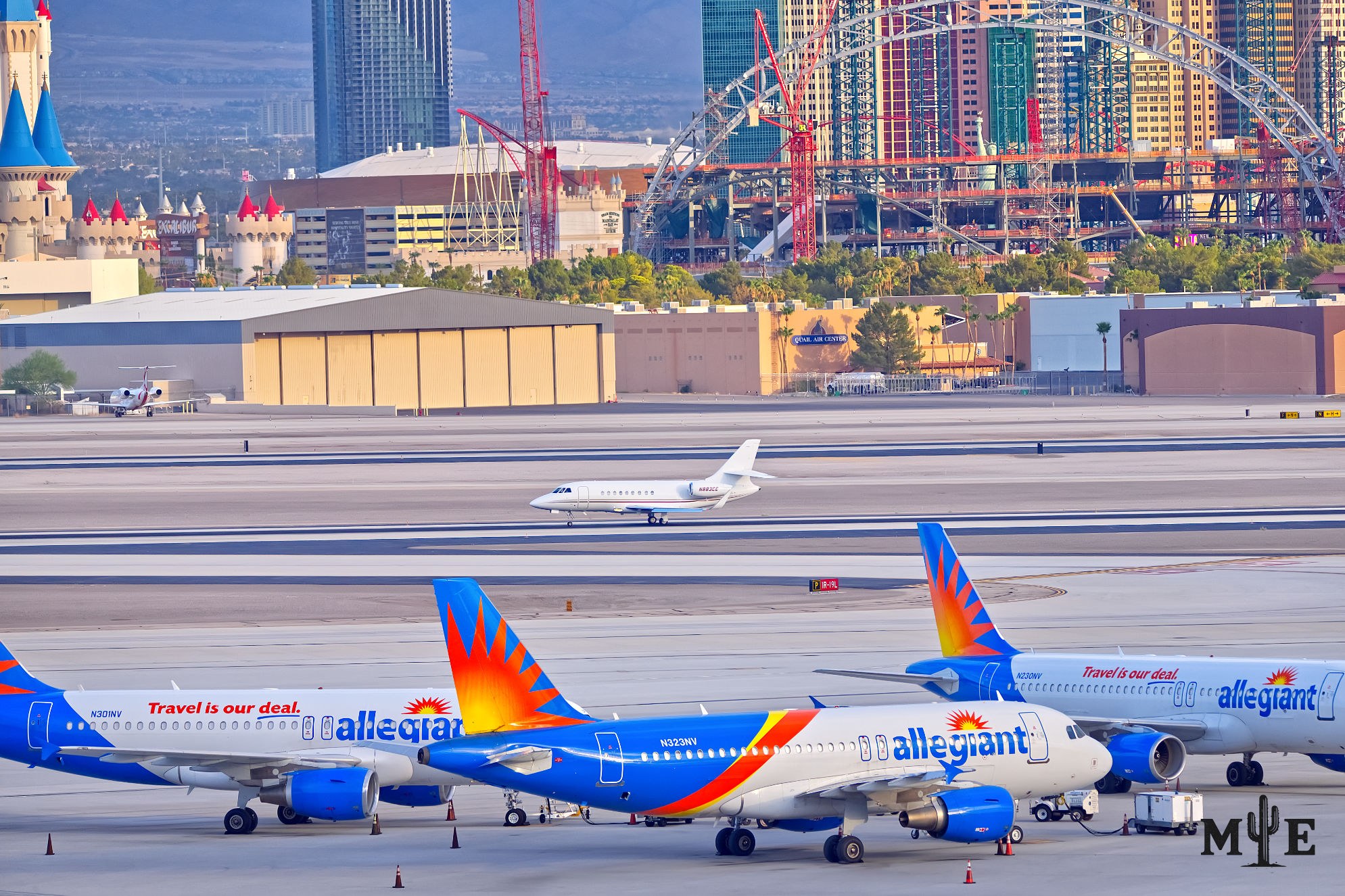
Las Vegas is one of the easiest major American destinations to reach by air and one of the easiest to underestimate. A flight from Southern California, the Bay Area or Phoenix often lasts roughly one to two hours, yet the complete trip can still consume half a day once driving, parking, security, baggage claim and airport transportation are included. The smartest way to plan a Vegas flight is therefore not to chase the lowest displayed fare. It's to minimize the total cost and friction from your front door to your hotel, home or meeting.
Harry Reid International Airport handled nearly 55 million passengers in 2025 and connects Las Vegas with more than 170 markets. It sits immediately east of the Strip, which is a major advantage: visitors can see resort towers while taxiing and usually avoid a long airport-to-city transfer. The tradeoff is intensity. Las Vegas produces concentrated surges around weekends, conventions, holidays, major fights, festivals and large sporting events. So an airport that feels effortless on Wednesday afternoon can feel very different on Sunday morning.
Flying from Orange County and greater Los Angeles
For most Orange County residents, John Wayne Airport is the convenience choice. Its smaller than LAX, its terminals are manageable, and it currently offers Las Vegas service from several airlines, including Southwest, Frontier, Delta, Breeze and JSX. Terminal parking is currently $30 per day, while the off-airport Main Street lot is $20 per day and connected by shuttle. The weakness is schedule depth: a fare that looks higher than LAX may still be the better purchase if it saves two hours of freeway exposure and expensive Los Angeles parking.
LAX offers the widest field of schedules, airlines and connecting possibilities, and it often produces aggressive fares because so many carriers compete for Southern California traffic. Its obstacle is not the flight; it is reaching the terminal. The central terminal loop can be slow, and drive-up parking currently runs as high as $60 per day in the terminal garages, compared with $35 at Economy Parking and $20 at Budget Parking before any advance-booking discount. The FlyAway bus is a practical alternative from Union Station or Van Nuys and currently costs $12.75 each way. A cheap LAX ticket stops being cheap when it requires a long rideshare, several days of premium parking or a stressful terminal transfer.
Hollywood Burbank Airport deserves serious consideration for travelers in the San Fernando Valley, northern Los Angeles and parts of the city. Southwest operates the Las Vegas route, the airport is linked with Metrolink, Amtrak and local buses, and current long-term parking options range roughly from $16 to $28 per day. BUR usually offers fewer departure choices than LAX, but its compact scale can produce the shortest door-to-gate journey. Long Beach and Ontario can also win depending on where the traveler lives. The right Southern California airport is often the one that avoids crossing the region at the wrong hour, not the one advertising the lowest base fare.
Flying from the Bay Area
The Bay Area presents the same decision in three versions. San Francisco International works well for travelers coming from the city or Peninsula, especially because BART connects directly with the airport and AirTrain handles movement among terminals, parking and the rental-car area. As of mid-2026, nonstop Las Vegas service is offered by Alaska, Frontier, Southwest and United.
Oakland is often the natural choice for the East Bay. Its airport BART connector links the terminals with Coliseum Station, and current drive-up parking ranges from $18 per day in Economy to $26 in Daily parking. Oakland’s Las Vegas schedule has long benefited from Southwest’s western network, and Frontier is adding more service in August 2026. San Jose is usually best for the South Bay. Southwest and Frontier currently advertise the Las Vegas route, VTA Route 60 links the airport with Milpitas BART and other transit, and parking ranges from $19 in Economy to $41 at the closest Terminal B garage.
These airports are close enough in airfare searches to tempt travelers into false savings. A San Jose resident who books SFO to save $35 may spend the difference getting there. An East Bay traveler who insists on SFO may add bridge traffic, tolls and uncertainty. Compare all three, but assign a real dollar value to travel time, parking and the risk of missing the flight.
Flying from Phoenix
Phoenix is another strong short-haul market. American, Frontier, Southwest and Sun Country currently list nonstop Phoenix–Las Vegas service. Phoenix Sky Harbor is large, but the automated PHX Sky Train makes it easier to connect the terminals with East Economy parking, the 24th Street lot, the rental-car center and Valley Metro. The flight itself is short enough that driving becomes a legitimate alternative, especially for two or more people carrying luggage. Flying usually wins for a Strip weekend or a same-day business trip; driving can win when the destination is in Henderson, Summerlin or an outlying recreation area and a rental car would otherwise be required.
What's happened to fares?
Airfares have not moved in one clean direction. Federal transportation data show that the average U.S. domestic itinerary fare was $387 in 2025—slightly lower than 2024 after inflation—but the first-quarter 2026 average rose to $428, up from the inflation-adjusted final quarter of 2025. Those are national figures, not Las Vegas route averages, and they exclude optional charges such as checked bags and seat selection. They show why travelers can simultaneously encounter higher totals and still find remarkably low sale fares on short Las Vegas routes.
Vegas remains a sale-driven market. Midweek departures, less desirable hours and dates outside major events can still produce inexpensive tickets. Southwest promotes a Low Fare Calendar and has run percentage-off sales; ultra-low-cost carriers may display even lower base fares. The correct comparison is the final checkout total: airfare, seat assignment, carry-on or checked bag, airport parking, ground transportation and the value of the schedule. A $49 fare can become more expensive than a $99 fare after two bags, a seat and inconvenient parking are added.
No single airline is always best. Southwest has an unusually dense Las Vegas presence and offers many nonstop western routes, but its product changed materially in 2026: assigned seating now applies to travel from January 27 onward, and most lower fare bundles no longer include two free checked bags. Frontier and other low-cost carriers can be excellent for a traveler taking only a personal item and accepting tighter rules. Alaska, Delta, United or American may be stronger for people whose status, credit card, lounge access or onward connection reduces the effective cost. Additionally, an airline with six daily departures gives a disrupted traveler more recovery options than an airline with one.
The best and worst times to fly
Early departures generally have one structural advantage: the aircraft and crew have had less time to accumulate delays from earlier flights. That does not mean a predawn Vegas departure is automatically quiet. Sunday mornings, holiday periods and the end of major events can generate long lines before sunrise. Late-night flights may be cheaper and can preserve a full day in Las Vegas, but the final flight of the evening leaves fewer alternatives after a cancellation.
For leisure travel, arriving Tuesday through Thursday is often calmer than joining the traditional Friday arrival wave, and leaving before the Sunday exodus can reduce both fares and airport pressure. There is no universally cheapest month because Las Vegas demand is event-driven. January can be inexpensive after holiday travel yet costly around major conventions. Summer room rates may soften during extreme heat, but afternoon thunderstorms, high temperatures and origin-airport weather can complicate operations. Autumn and spring offer comfortable weather but include some of the city’s biggest festivals, races and conventions. Check the citywide event calendar before assuming a random weekend is ordinary.
The most useful Reddit consensus is not a precise arrival time. It's that Las Vegas is inconsistent. In recent discussions, some travelers reported moving through security in minutes while others recommended a full two-hour cushion for an early Sunday or holiday flight. Posters also repeatedly warn that the short flight can be overwhelmed by freeway traffic, rental-car returns and crowded rideshare zones. Those anecdotes are useful as a warning, not as a replacement for official guidance. Harry Reid and the TSA recommend arriving at least two hours before a domestic departure and three hours before an international departure.
Getting from Harry Reid into Las Vegas
The Strip is the easiest destination. Airport taxis use flat-rate Strip zones, currently $22.25, $26.25 or $30.25 depending on the hotel’s location. Rideshare pickup is not at the ordinary arrivals curb: Terminal 1 passengers go to Level 2 of the parking garage, while Terminal 3 has its own designated pickup area. That extra walk surprises first-time visitors, particularly with luggage.
Public transportation is inexpensive but slower. RTC routes 108, 109 and the Centennial Express serve Terminal 1, and the Centennial Express also serves Terminal 3. Rental-car customers take a shuttle to the consolidated rental facility rather than walking directly to an on-site garage. The Vegas Loop now provides another airport option, with pickup at Level Zero in both terminals and departures-level drop-off, although availability and pricing should be checked for the specific trip.
Downtown Las Vegas is straightforward by taxi, rideshare or the Centennial Express, but it's farther than the central Strip. Henderson and Summerlin are easy by car yet require a longer cross-valley transfer; a rental car becomes more useful when the trip includes suburban appointments, Red Rock Canyon, Lake Mead or repeated movement beyond the resort corridor. During Formula 1, major conventions and holiday peaks, road closures and hotel loading zones can turn a geographically short transfer into a slow one.
A practical booking strategy
Start with every airport that's genuinely reasonable from home. Search the full date range, then compare the two or three schedules that preserve the most useful time in Las Vegas. Add bags, seats, parking and ground transportation before choosing. Favor an airline with multiple daily flights when the trip is time-sensitive. Avoid razor-thin connections for a journey that usually has abundant nonstop options.
On the return, confirm the terminal before leaving the hotel, reserve parking when the airport offers it, and allow more time when a convention, race, holiday or festival is ending. Harry Reid has five security checkpoints, but the closest checkpoint is not always the fastest or available for every gate. During the most congested periods, airport officials have promoted a “4-3-2-1” framework: begin airport transportation or rental-car return four hours before departure, check bags three hours before, enter security two hours before and reach the gate one hour before.
Flying to Las Vegas is usually simple. The mistake is treating only the airborne portion as the trip. Choose the departure airport that fits your actual geography, compare the complete price rather than the headline fare, and assume that a busy entertainment city can create demand at unusual hours. Done well, the journey becomes what the photograph suggests: a quick transition from runway to skyline, with the destination already visible before the plane has fully stopped.
Prints, Artwork and Licensing
This photograph is available for project-specific review as finished wall artwork and for appropriate editorial, commercial, hospitality, corporate, healthcare, or civic licensing. Final dimensions, cropping, materials, usage, production, and installation requirements are confirmed for each project.
Use the inquiry button above and reference ME-00412 so the exact image can be identified quickly.


