Metropolitan
Southwest on the Move
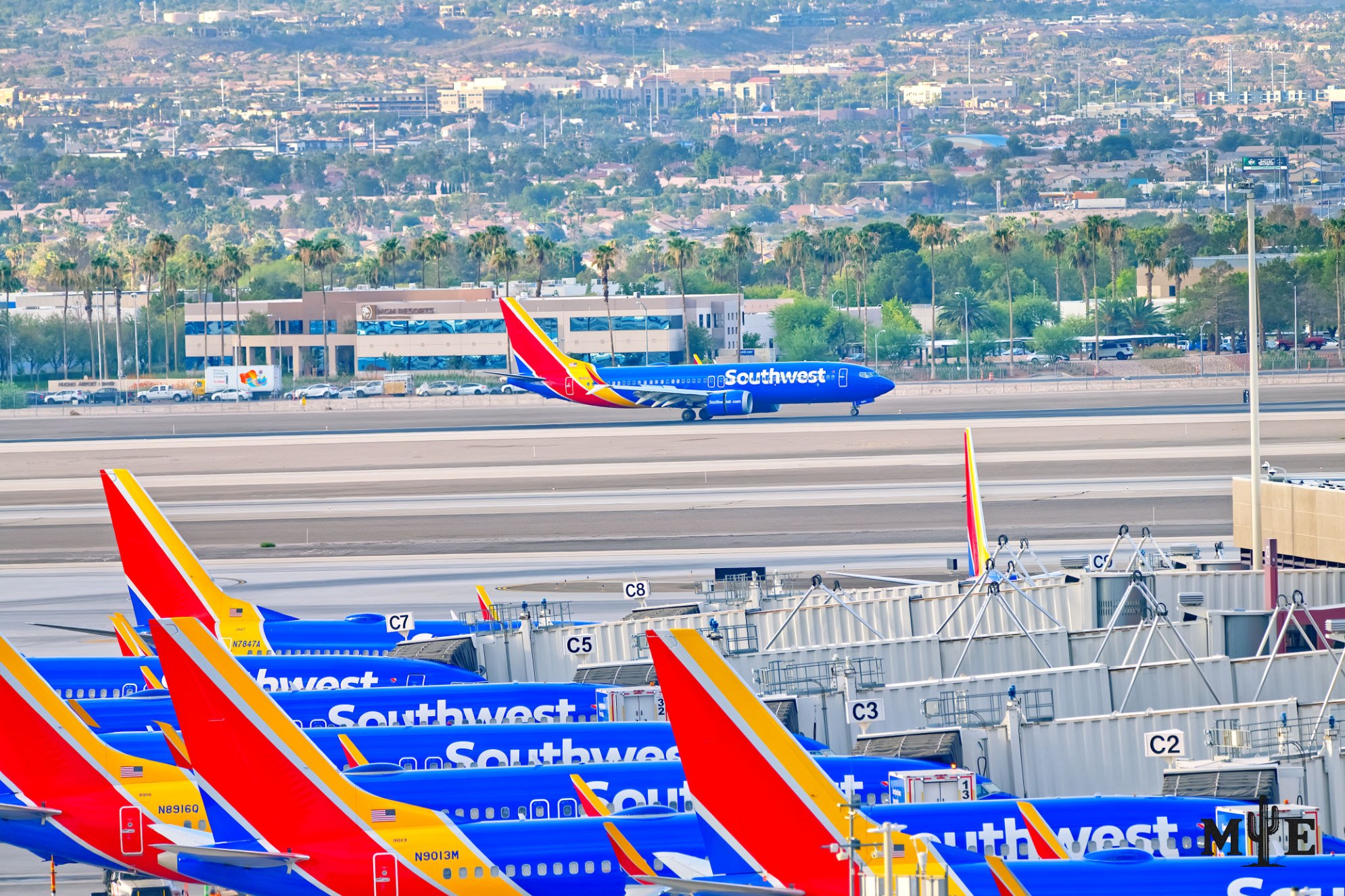
In a telephoto view of Harry Reid International Airport, a cluster of Southwest jets can look less like ordinary traffic and more like a fleet assembling. That impression is not misleading. Las Vegas is one of the airline’s largest and most strategically important stations, with an unusually dense schedule connecting the city to destinations across the West and the rest of the country.
Is Las Vegas becoming a Southwest hub? In practical terms, it already behaves like one. Southwest built its reputation around point-to-point flying rather than the traditional hub-and-spoke systems associated with airlines such as American, Delta and United. Las Vegas is therefore better described as a major operating base or focus city: passengers can connect there, aircraft and crews flow through it in large numbers, and the schedule offers hub-like reach without Southwest formally organizing the entire network around a conventional hub.
The Las Vegas operation is also getting larger. In May 2026, Southwest announced that it would introduce or increase service on 26 of its 81 Las Vegas routes and add service between Las Vegas and 10 more airports by spring 2027. The airline said the expansion would produce a record number of daily departures as it marked 45 years of serving the city. Las Vegas generates conventions, sporting events, concerts, family visits and a large base of local travelers, while its geography makes it a natural bridge among short western routes and longer cross-country flights.
Southwest is not merely a Las Vegas phenomenon. The airline serves more than 120 airports in a dozen countries and carried more than 134 million customers in 2025. Its network has historically been especially strong in short and medium-haul domestic markets, but it does not specialize only in quick hops. It also flies long domestic routes, Hawaii service and near-international destinations. Las Vegas is popular within that system because it can support both origin and destination passengers and connections throughout the day.
The passenger experience is in transition. Southwest was long distinguished by open seating and two free checked bags. Assigned seating began for travel on or after January 27, 2026, and most lower fare bundles now charge $35 for the first checked bag and $45 for the second. Higher bundles, elite status and certain credit-card benefits can change those rules. The shift makes Southwest more familiar to passengers who want to know their seat in advance, but it has also weakened two features that created unusually loyal customers.
That split is obvious in traveler discussions. Supporters still praise friendly crews, plentiful nonstop routes, flexible ticket changes and a generally approachable brand. Critics argue that assigned seats, bag charges and a more segmented fare structure make Southwest less distinctive and sometimes less economical. A traveler with one carry-on who values six possible departure times may still find Southwest excellent. A family checking several bags may discover that the total is no longer automatically lower than a competing airline.
Southwest regularly promotes low-fare calendars and limited sales, but it's not consistently the cheapest airline to Las Vegas. Frontier or another low-cost carrier may win on the bare ticket price, while Southwest can win through schedule frequency, recovery options after a disruption or a fare that permits changes without a separate change fee. The only reliable comparison is the final price after bags, seat choice and travel timing are included.
Corporately, Southwest Airlines Co. is the publicly traded company; it does not sit beneath a separate consumer-airline parent. Its listed subsidiaries include operational and investment entities such as Southwest Jet Fuel Co., Triple Crown Assurance, renewable-fuel ventures and legacy AirTran companies. AirTran is no longer a separate passenger brand, and Southwest does not operate a collection of public-facing airline subsidiaries comparable to a large international airline group.
The departing jet in this photograph may appear to be escaping the crowd, but the crowd is the larger story. Southwest’s presence in Las Vegas is not an accidental pileup of familiar aircraft. It is a deliberate concentration of routes in a market that fits the airline unusually well—and one that's becoming even more important as Southwest rebuilds its network and changes the product passengers once thought they knew.
Prints, Artwork and Licensing
This photograph is available for project-specific review as finished wall artwork and for appropriate editorial, commercial, hospitality, corporate, healthcare, or civic licensing. Final dimensions, cropping, materials, usage, production, and installation requirements are confirmed for each project.
Use the inquiry button above and reference ME-00411 so the exact image can be identified quickly.


