Telephoto
Spotlight on Fontainebleau
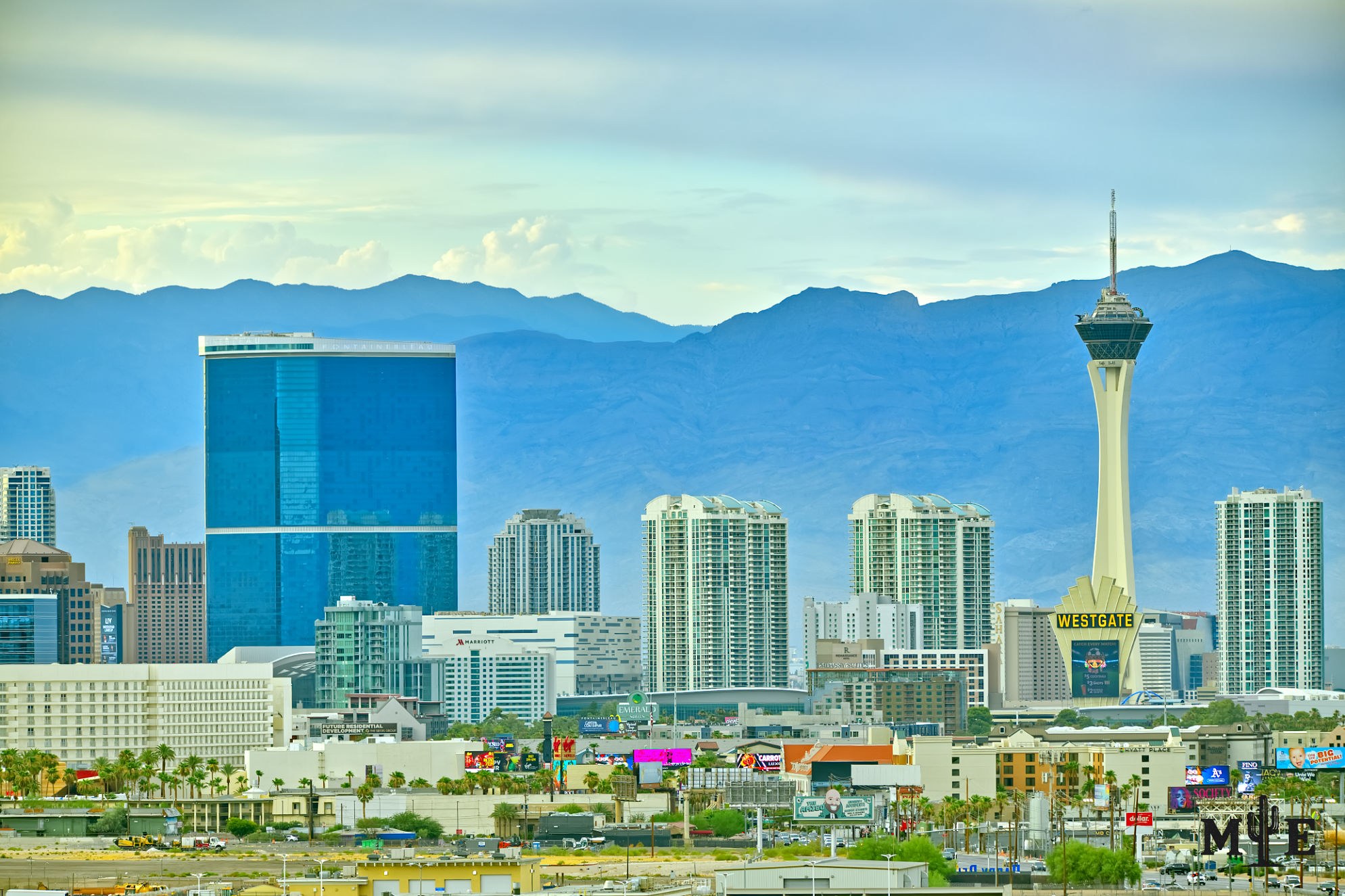
At dawn, Fontainebleau Las Vegas does not blend into the skyline. Its tall blue tower catches the first cool light while neighboring resorts remain partly in shadow, and the Spring Mountains turn the entire north Strip into a layered composition of glass, city and desert. The building looks established from a distance, but as a Las Vegas resort it's still remarkably new.
Fontainebleau opened on December 13, 2023, with 3,644 rooms in a 67-story tower. Its path to opening began in the 2000s, stopped during the financial crisis, passed through different owners and identities, and finally returned to its original Fontainebleau branding. That long interruption helps explain why the name is not yet as universally recognized in Las Vegas as Caesars Palace, the Bellagio, Luxor or New York-New York. Those properties have spent decades appearing in films, advertisements and family photographs. Fontainebleau has a distinguished brand history, but its Las Vegas identity has had only a few years to form.
The name comes from Fontainebleau Miami Beach, the landmark hotel that opened in 1954 and became associated with Morris Lapidus design, celebrities and mid-century glamour. “Fontainebleau” is a French proper name, best known internationally through the town and Chateau de Fontainebleau outside Paris. Its spelling was not invented to make a Las Vegas hotel sound exotic; the Nevada resort inherited an established hospitality name with French historical roots.
Why is the tower blue? There is no mysterious engineering explanation. The blue-glass exterior is a visual identity: it reflects the desert sky, separates the tower from the warmer gold and bronze buildings nearby, and carries an implied connection to the water-and-sky palette of the Miami Beach original. Fontainebleau’s designers have explicitly used navy, silver and seascape tones throughout parts of the property. The result is especially effective at dawn, when the glass can move from deep blue to pale silver as the sun rises.
Fontainebleau does not have a single family attraction directly comparable to Mandalay Bay’s Shark Reef Aquarium. Instead, it operates as a collection of public experiences. Visitors who are not staying at the hotel can enter the casino, make restaurant reservations, visit bars and lounges, shop, view the resort’s art and attend ticketed entertainment. The property advertises more than 30 restaurants and bars, ranging from quick options to formal dining, along with nightlife venues such as LIV and more intimate spaces such as Nowhere.
Two attractions help distinguish it from a resort that offers only gambling and dining. The Hall of Excellence, developed with Tom Brady and broadcaster Jim Gray, presents sports and cultural memorabilia in a curated exhibition. The property also contains a substantial collection of publicly displayed art, including murals, sculpture and kinetic work. BleauLive hosts concerts and events, while the spa, fitness facilities, pool complex and shopping add the expected luxury-resort layers, although access to some amenities depends on a room reservation, appointment, ticket or day-use policy.
The resort’s scale is another part of its identity. It includes extensive convention and meeting space, a large casino and a six-acre pool area, placing it in the category of a self-contained modern megaresort rather than a themed attraction. Its interior design is polished and contemporary, with selective references to the Miami brand instead of an attempt to reproduce South Florida in Nevada.
That approach may be why Fontainebleau is still finding its place in public memory. Caesars has Roman imagery. Luxor has a pyramid. New York-New York has a miniature skyline. Fontainebleau asks visitors to remember a mood: blue glass, fashion, nightlife, dining and a heritage that began on the opposite side of the country.
In this photograph, the Strat at the far right provides a useful comparison. The Strat is perhaps an internationally recognizable icon; Fontainebleau is recognized through mass, color and prominence. As the resort accumulates major events, repeat visitors and cultural associations, its name will likely become less of a question. The architecture has already done its part: on the north Strip, it's nearly impossible to overlook.
Prints, Artwork and Licensing
This photograph is available for project-specific review as finished wall artwork and for appropriate editorial, commercial, hospitality, corporate, healthcare, or civic licensing. Final dimensions, cropping, materials, usage, production, and installation requirements are confirmed for each project.
Use the inquiry button above and reference ME-00410 so the exact image can be identified quickly.


