Red Rock Canyon Las Vegas
Ash Trees in Red Rock Canyon
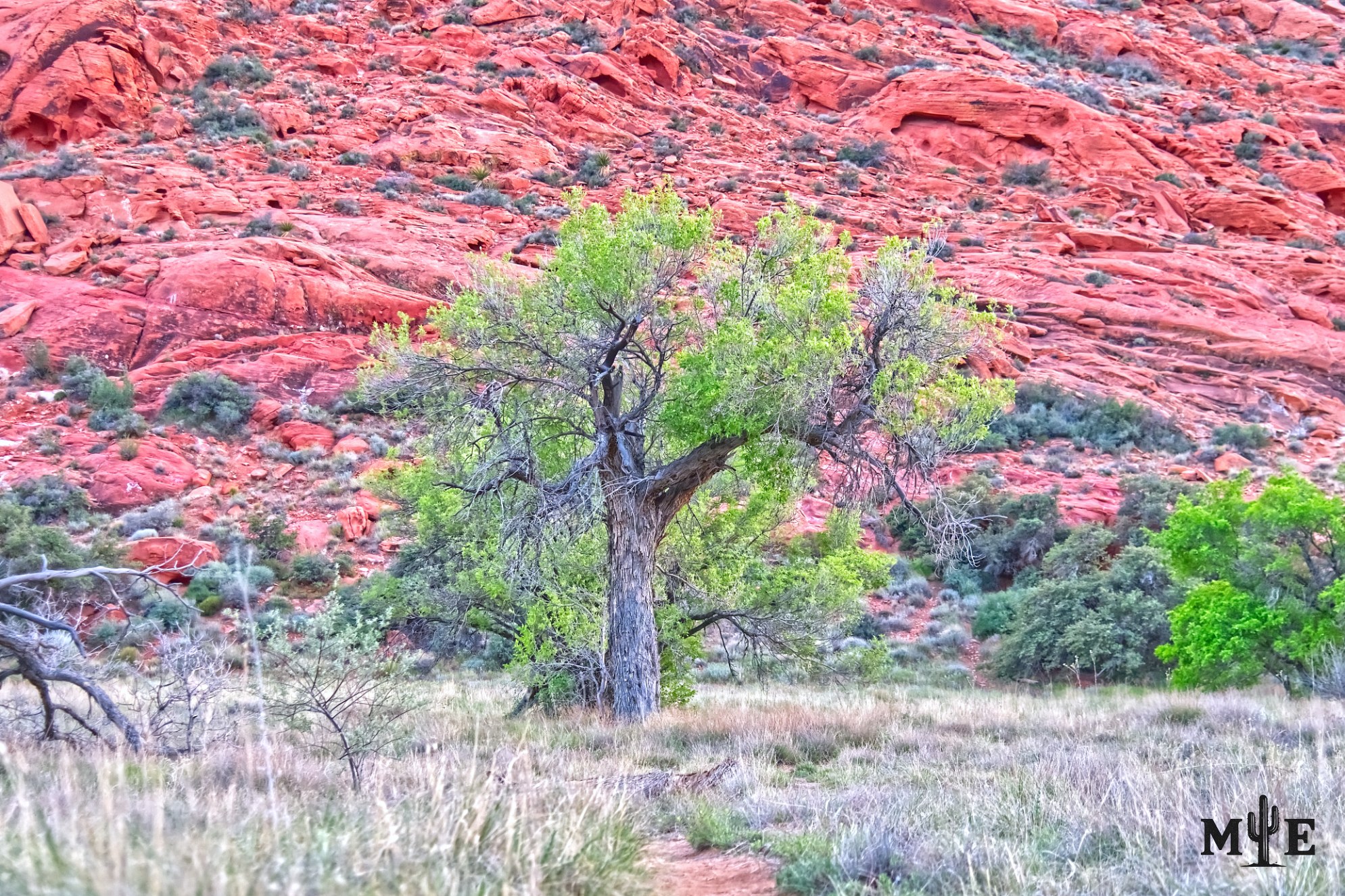
An ash tree in Red Rock Canyon immediately stands out because it reveals something the surrounding desert often conceals: dependable water. Much of the conservation area is covered by creosote, blackbrush, yucca, cacti and other plants capable of surviving long periods with little rainfall. A mature, broad-leaved tree requires more consistent moisture. Its presence suggests that water remains close enough to the surface for deep roots to reach it, even when the surrounding ground appears dry.
This velvet ash was photographed along the Red Spring Trail in Calico Basin, where a year-round spring supports a meadow, mature trees and a narrow band of unusually green habitat. The Bureau of Land Management identifies velvet ash among the native trees growing around Red Spring. The species occurs across parts of the American Southwest, particularly along streams, canyon bottoms, springs and desert washes where underground moisture lasts longer than ordinary rainfall.
Velvet ash is well suited to Southern Nevada’s heat, strong sunlight and dry air, but it's not a tree of the most exposed desert flats. It survives here because Red Spring creates conditions that are uncommon in the Mojave. Water rising from beneath the ground supports vegetation that would not otherwise grow so densely against the sandstone hills. The result is a small oasis surrounded by terrain that appears much harsher and drier.
That contrast makes the tree ecologically important. In the open desert, shade can be scarce and temperatures near the ground can become extreme. The ash canopy breaks direct sunlight, cools the space beneath it and creates shelter for birds, insects and small animals. Fallen leaves collect around the base of the tree, adding organic material to soil that is otherwise rocky and low in nutrients. Its roots help hold moist ground in place along the spring and nearby drainage areas.
The tree is part of what is known as a riparian habitat—a green corridor formed around a dependable water source. These areas may occupy only a small portion of the desert, but they support a much greater concentration of life than the surrounding slopes. Birds can nest or rest in the branches, insects gather around the leaves and damp ground, and larger animals may pass through in search of water, shade or cover. The ash does not stand apart from the ecosystem; it helps create one of its most active gathering places.
Seasonal change makes it even more noticeable. Red Rock Canyon is usually defined by colors that appear permanent: red and cream sandstone, gray limestone and the muted greens of desert shrubs. A deciduous ash changes throughout the year. Its leaves provide concentrated green during the warmer seasons, then may turn yellow or gold before falling in autumn. Against the sandstone, that changing foliage brings a softer and more temporary form of color into a landscape shaped by rock.
The relationship between the tree and the mountain behind it is central to this photograph. The sandstone began as desert dunes approximately 180 million years ago and was slowly transformed into solid rock. The velvet ash is part of the present-day landscape, responding to current water levels, temperatures and seasons. One represents deep geological time; the other shows how life continues to adapt within the desert today.
Red Spring’s dependable water also made the area important long before it became a recreational destination. Springs throughout the Mojave influenced where Indigenous people traveled, gathered plants, hunted and stopped during seasonal movement. Wildlife followed many of the same water sources. Later ranchers, settlers and travelers also depended on the limited places where water could be found. The spring is therefore not merely a scenic feature beside a modern trail. It's part of the reason people and animals have repeatedly used this part of Calico Basin.
Today, the Red Spring boardwalk and established paths allow visitors to experience the unusual damp soil and fragile vegetation. Staying on the trail is important because desert springs are small compared with the surrounding landscape, and repeated foot traffic can compact the soil or disturb the plants that depend on it.
The velvet ash in the photograph is remarkable because of where it grows. Beneath towering red sandstone and within the Mojave Desert, it marks a place where water remains close enough to sustain a broad canopy, seasonal foliage and a concentrated community of life. It's a visible reminder that Red Rock Canyon is not simply a dry landscape of stone. Beneath portions of its surface, water continues to shape where life gathers and how the desert survives.
Prints, Artwork and Licensing
This photograph is available for project-specific review as finished wall artwork and for appropriate editorial, commercial, hospitality, corporate, healthcare, or civic licensing. Final dimensions, cropping, materials, usage, production, and installation requirements are confirmed for each project.
Use the inquiry button above and reference ME-00387 so the exact image can be identified quickly.


